

Fiber Broadband vs Wireless Internet: Which is Better for Homes in Malad?
In today’s digital world, choosing the right internet connection has become essential for everything from work and online classes to streaming and gaming. Many households in Mumbai, especially in areas like Malad, often compare fiber broadband vs wireless internet before selecting a connection for their home. While both options provide internet access, the experience they deliver can be very different depending on speed, stability, usage, and the number of connected devices.
With increasing demand for high-speed internet for OTT streaming, video calls, smart TVs, and gaming consoles, users are now looking for more reliable and future-ready solutions. Understanding the differences between fiber broadband and wireless internet can help families make smarter decisions based on their daily needs. In this blog, we compare both technologies in detail to help you decide which internet option is better for homes in Malad.
What is Fiber Broadband Internet and How Does It Work?
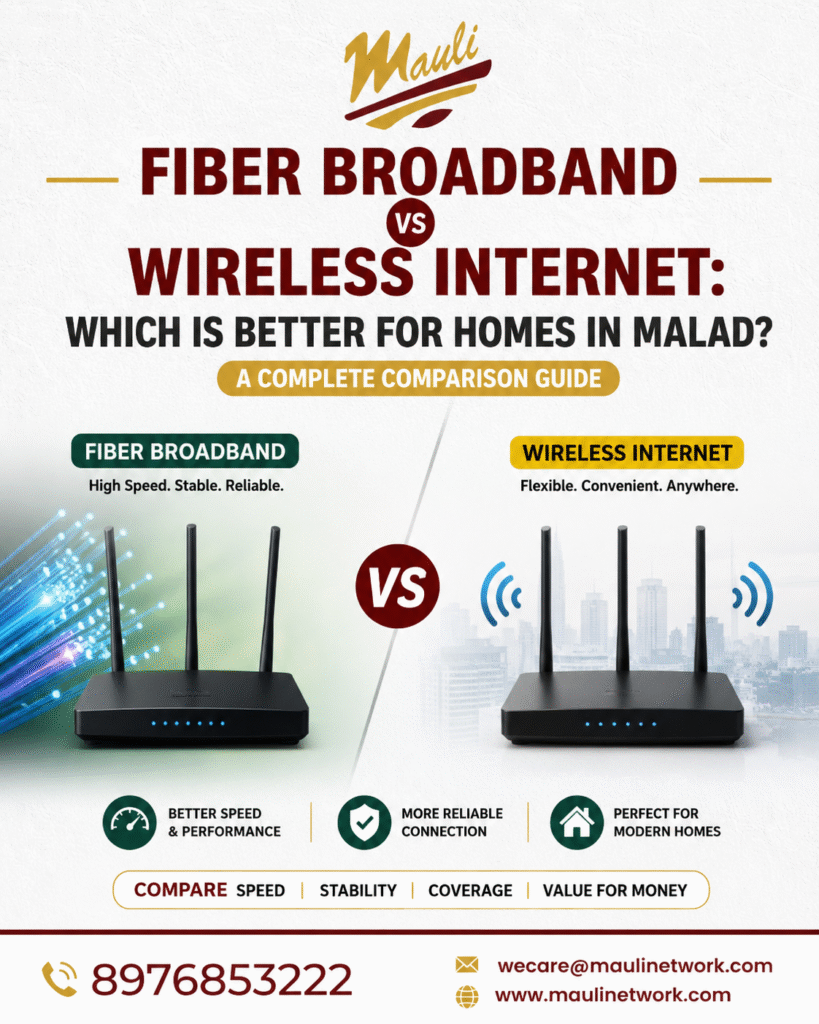
Fiber broadband is a high-speed internet technology that uses fiber-optic cables to transmit data using light signals. Compared to traditional internet methods, fiber broadband offers significantly faster speeds, lower latency, and more stable connectivity. This makes it one of the most preferred choices for homes that depend heavily on uninterrupted internet usage.
One of the biggest advantages of fiber broadband in Malad is its ability to handle multiple devices at the same time without slowing down. Whether family members are attending online meetings, watching 4K content, downloading files, or playing online games, fiber internet maintains consistent performance. Since fiber connections are directly wired to the home, they are generally less affected by weather conditions or network congestion.
Another important factor is reliability. Fiber broadband is designed for modern digital lifestyles where internet downtime can affect productivity and entertainment. Users who require smooth video conferencing, fast uploads, and uninterrupted streaming often prefer fiber broadband because of its stable speed performance throughout the day.
As internet usage continues to increase across homes in Mumbai, fiber broadband is becoming the preferred solution for users looking for long-term internet performance and better online experiences.
What is Wireless Internet and Why Do Some Users Prefer It?
Wireless internet usually refers to internet services delivered without direct fiber cabling into the home. In many cases, wireless internet providers use radio signals or mobile network-based systems to deliver connectivity. These setups are often chosen because they can be installed quickly and may work well in locations where wired infrastructure is limited.
One of the main reasons some users choose wireless internet is convenience. Installation can be faster, and users may not require extensive wiring inside the home. Wireless internet can also be useful for temporary setups or users with basic internet requirements such as casual browsing, social media usage, or light video streaming.
However, wireless internet performance can vary depending on signal strength, weather conditions, building structure, and network congestion. In densely populated areas of Mumbai, users may sometimes experience fluctuations in speed during peak usage hours. This can affect activities such as HD streaming, online gaming, and video conferencing.
Wireless internet may still be suitable for small households or users with limited daily internet needs. But for homes that depend heavily on stable connectivity across multiple devices, performance consistency can become an important consideration when comparing wireless internet with fiber broadband.
Get the Perfect Internet Speed for Your Home
Fiber Broadband vs Wireless Internet: Speed and Performance Comparison
When comparing fiber broadband vs wireless internet, speed and consistency are often the biggest deciding factors. Fiber broadband is generally known for delivering much higher download and upload speeds compared to wireless internet connections. This becomes especially important for homes using smart TVs, OTT platforms, cloud storage, and remote working tools simultaneously.
Fiber broadband connections are built to support high-bandwidth activities without interruptions. Streaming 4K content, participating in HD video calls, or downloading large files can happen smoothly because fiber networks are designed to carry large amounts of data efficiently. Users also benefit from lower latency, which is important for online gaming and real-time communication.
Wireless internet, on the other hand, may experience variations in speed depending on network traffic and environmental conditions. If multiple users are connected to the same wireless tower or network source, internet speeds may fluctuate during busy hours. Signal interference from walls, weather, or nearby devices can also impact overall performance.
For homes in Malad where multiple family members use the internet throughout the day, fiber broadband often provides a more stable and consistent experience. Users who prioritize uninterrupted streaming, fast browsing, and reliable work-from-home connectivity usually find fiber internet better suited for modern digital usage.
Which Internet Option is Better for Streaming, Gaming, and Work From Home?
Modern households use the internet for much more than simple browsing. Today, people rely on internet connections for OTT entertainment, online classes, gaming, remote work, and smart home devices. This makes choosing the right internet provider in Mumbai more important than ever.
Fiber broadband is widely considered ideal for streaming and gaming because of its stable speeds and low latency. OTT platforms require consistent bandwidth to deliver smooth HD and 4K playback without buffering. Similarly, online gaming depends heavily on fast response times and stable connectivity. Fiber broadband helps reduce lag and improves overall gaming performance.
For work-from-home users, fiber broadband also provides reliable upload speeds for video meetings, file sharing, and cloud-based collaboration. Since multiple devices can remain connected without major speed drops, it becomes easier for entire families to use the internet simultaneously.
Wireless internet can still support basic entertainment and browsing activities, but performance may vary during peak usage periods. Users relying heavily on Zoom calls, gaming servers, or uninterrupted streaming may notice inconsistencies if the wireless network becomes congested.
As digital lifestyles continue to evolve, many households are moving toward fiber broadband solutions that offer better long-term performance for both entertainment and productivity.
Cost, Reliability, and Long-Term Value Comparison
Price is another important factor when choosing between fiber broadband and wireless internet. While wireless internet may sometimes appear affordable initially, users should also consider long-term performance, reliability, and value for money.
Fiber broadband often delivers better overall value because users receive consistent speeds, stable connectivity, and support for multiple devices. Households that consume large amounts of internet data for streaming, gaming, and remote work usually benefit more from reliable broadband plans than unstable lower-cost alternatives.
Reliability is especially important in cities like Mumbai where internet downtime can directly affect work productivity and daily entertainment. Fiber networks are generally more resistant to external interference and can maintain stable performance over longer periods.
Wireless internet may work well for lighter usage patterns, but users experiencing signal fluctuations or inconsistent speeds may eventually look for more dependable options. As internet consumption increases across homes, choosing a scalable and future-ready connection becomes increasingly valuable.
For users searching for the best broadband provider in Malad, comparing not just pricing but also performance consistency, customer support, and overall internet quality can help make a smarter decision.
Conclusion
Choosing between fiber broadband and wireless internet ultimately depends on your household’s internet usage and expectations. While wireless internet may suit basic browsing and light usage, fiber broadband offers better speed, stability, and reliability for modern digital lifestyles.
For homes in Malad that rely on OTT streaming, online gaming, video conferencing, and multiple connected devices, fiber broadband often delivers a smoother and more consistent experience. As internet needs continue growing, investing in a stable high-speed connection can improve both productivity and entertainment at home.
If you are looking for reliable high-speed internet and broadband solutions in Mumbai, explore the plans offered by Mauli Network to find a connection suitable for your home and daily internet needs.